

Pietramala and Its Legend
Pietramala, the Stone of San Zanobi, and Its Legend
According to the legend, during one of his visits to the Pietramala area, San Zenobio managed to convert many people living in the surrounding mountains. This angered the Devil, who decided to put an end to the saint's activities by challenging him.
The Devil proposed a competition to San Zenobio: whoever could carry the largest stone from the Idice River to the top of the hill would win and gain control over all souls. Zenobio accepted the challenge.
The Devil immediately hoisted an enormous boulder onto his shoulders and started ascending the path along the mountainside. However, Zenobio, with divine assistance, discovered an even larger stone and effortlessly lifted it with just his pinkie finger. He said to the Devil, "I will carry my stone so far from you that you won't be able to see it."
After a while, the Devil began to tire and thought, "Zenobio can never carry his stone so far that I won't be able to see it." So, he placed his stone where he was.
Zenobio, who was near a ridge, outpaced the Devil and set his stone on the other side of the ridge, hiding it from the Devil's view. Retracing his steps, Zenobio told the Devil that he had won the challenge because he had taken his stone farther than the Devil could see.
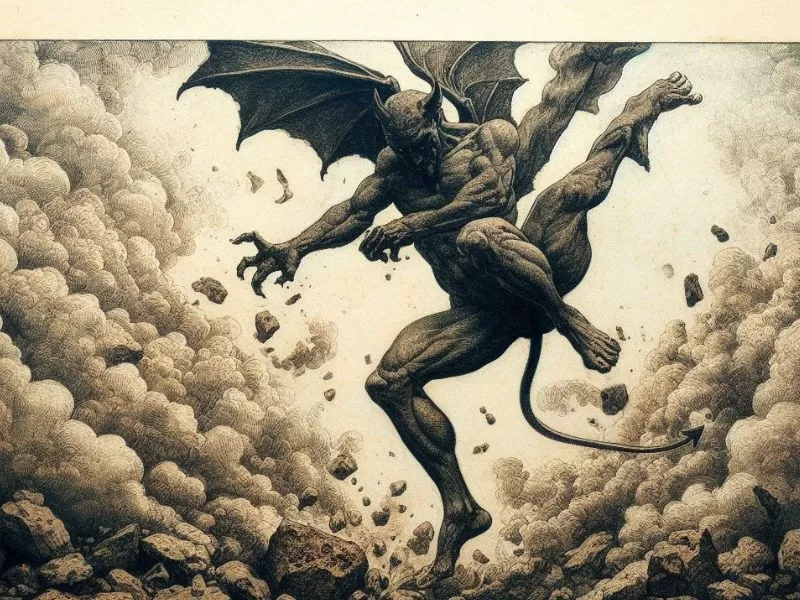
Realizing that he had not only lost in physical strength but also in cunning, the Devil became furious and destroyed his stone in anger before vanishing in a cloud of smoke and sulfur. Since then, that place has been known as the "Sasso della Mantesca."
Even today, various versions of this legend are passed down, all symbolic of the eternal struggle between good and evil, represented by San Zenobio and the Devil.
Altri articoli

Beatrice Portinari, the impossible love
The impossible love of Dante and its impact on literature.
Gambassi Terme
Prominence on Via Francigena.
The stone of the outrage
From 1282 priors were representatives of the seven Major guilds: they fighted against the old aristocratic families revenging an active role of trade in Florence.
Pretorio Palace
The restoration works conducted in 2020-2021